
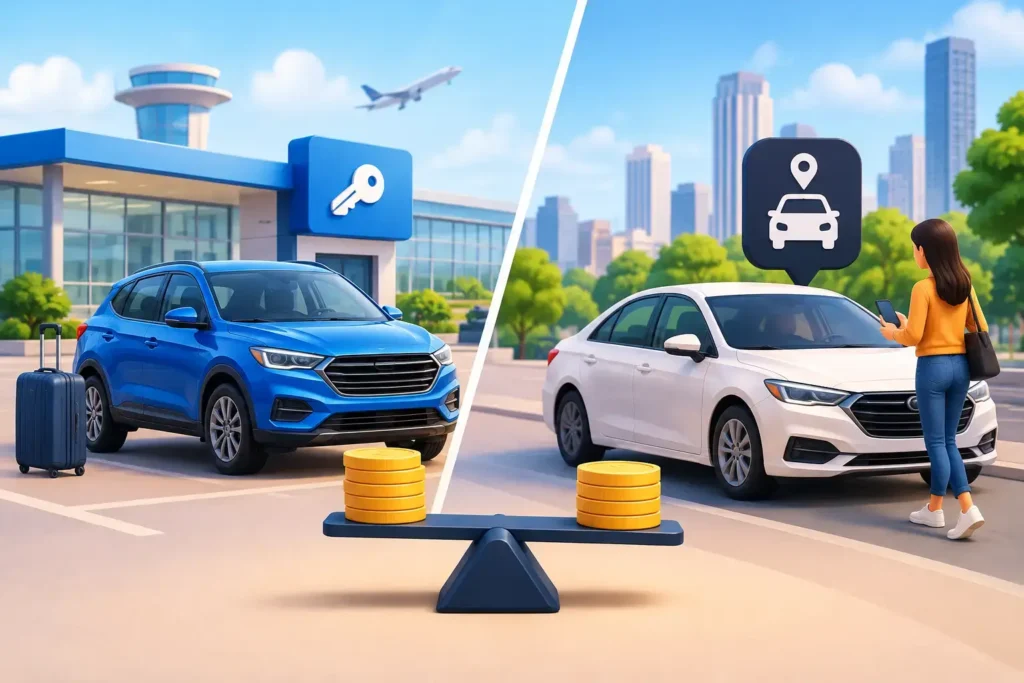
Landing at a new airport with bags in hand is when the rental car vs rideshare travel decision stops being theoretical. One choice can feel like a steal. The other can quietly drain your vacation fund through surge pricing, parking fees, gas, tolls, and the kind of “mandatory” add-ons nobody mentions until checkout.
For budget travelers, the cheapest option is rarely the one with the lowest headline price. It depends on where you are going, how long you are staying, how many people are traveling, and whether your itinerary involves more than a hotel pool and one dinner reservation. Here is how to spot the better deal before you book.
Rental Car vs Rideshare Travel: Start With Your Trip Shape
A rental car usually wins when your trip includes frequent movement. Think beach hopping in Florida, winery stops near Napa, a national park itinerary, a poker tournament outside the main hotel zone, or a family visit where every day involves a different address. Once you need several rides per day, the math can flip quickly.
Rideshare often wins on short city breaks. If you are staying in Manhattan, downtown Chicago, Boston’s Back Bay, or central San Francisco, a car can become an expensive piece of luggage. Parking may cost more than the rental itself, traffic can eat away at your day, and public transportation may cover the big attractions better than either option.
The right question is not “What does a rental car cost per day?” Ask, “What will I spend getting everywhere I actually plan to go?” That includes the airport trip, meals, attractions, shopping runs, late-night rides, and the one spontaneous detour that turns into the best part of the trip.
When a Rental Car Is the Better Deal
Rental cars give you a fixed base cost, which is a major advantage when your itinerary is packed. A $45 daily rate may look higher than a $20 airport rideshare, but take three or four rides a day for several days and the rideshare total can run wild.
A rental is especially likely to save money when you are traveling with three or more people. Splitting the rental, gas, and parking between friends or family can make the per-person cost surprisingly low. With rideshare, a larger vehicle category costs more, and finding one during a busy arrival window can mean both a wait and a surge-priced fare.
It also gives you freedom that is hard to price. You can leave before sunrise for a trailhead, toss beach chairs in the trunk, change dinner plans without checking a fare estimate, and make a grocery run that saves you from buying every breakfast at tourist prices. For travelers staying outside a city center, that flexibility can be worth plenty.
Still, do not let a shiny daily rate pull off a heist on your wallet. The real rental total may include airport concession charges, taxes, a young-driver fee for drivers under 25, extra-driver fees, insurance, fuel, toll programs, hotel parking, and a security deposit hold on your card. Read the final price, not the first price.
Rental car costs people forget
Fuel is the obvious one, but parking is often the heavyweight. A hotel charging $35 to $60 per night for parking can turn a three-day rental into a bad deal fast. Check whether your accommodation includes parking, whether attractions charge separate fees, and whether street parking is realistic where you will be staying.
Also pay attention to pickup and return times. Reserving a car for 26 hours may be billed as two rental days. Returning it with less fuel than required can bring steep refueling charges, while skipping the inspection at pickup can leave you arguing over a scratch you did not make.
When Rideshare Is the Smarter Move
Rideshare shines when you need only a few point-to-point trips. A weekend spent near your hotel, convention center, casino, or downtown attractions is a prime example. No counter line, no parking garage, no wrong turn into a toll lane, and no worrying about a car while you are trying to enjoy the trip.
It is also a strong choice if you plan to drink. A rental car may give you control over the schedule, but it does not solve the problem of getting back safely after cocktails, a concert, or a long poker session. With rideshare, the designated driver can enjoy the night, too.
For solo travelers, rideshare can be hard to beat. You are not spreading rental costs across a group, and a few well-timed trips may cost less than a day’s rental, gas, and parking. Airport rides can still be expensive, though, especially at peak arrival times, after major events, or during bad weather.
The rideshare fees hiding in plain sight
A fare estimate is not always the final number. Airport pickup surcharges, high-demand pricing, tolls, wait-time fees, and tips can all raise the cost. A late-night ride after a stadium event or festival may cost two or three times more than the same route at noon.
Availability matters, too. In major cities, a ride may arrive in minutes. In smaller towns, resort areas, and rural destinations, you may wait longer than expected or find few drivers on the road. If a missed dinner reservation, flight, or tournament registration would ruin the day, that uncertainty has a cost of its own.
Do the 5-Minute Trip Math Before Booking
You do not need a spreadsheet worthy of a finance department. Just compare realistic totals.
For a rental car, add the total booking price, estimated gas, parking, tolls, and any insurance or driver fees you expect to pay. Then divide by the number of people sharing the cost if you are traveling together.
For rideshare, estimate the airport ride plus your likely daily rides. Be honest here. If you plan to leave the hotel for coffee, lunch, sightseeing, dinner, and nightlife, that is not “two rides a day.” Add a cushion for surge pricing, especially if you will travel during a holiday weekend, convention, major sporting event, or rainstorm.
Here is a quick example. Two travelers on a three-night beach trip find a compact rental for $150 after taxes. Add $35 in gas and $30 for parking, and the total is about $215. If they expect four rides a day at an average of $18 each, plus $45 total for airport transfers, rideshare lands near $261 before any surge pricing. The rental wins, even before counting the convenience of carrying towels, groceries, and luggage.
Now change the setting to a two-night downtown getaway. The same rental costs $120, but hotel parking adds $100 and gas adds $15. If the travelers need only an $18 airport ride each way and two $15 rides around town, rideshare costs roughly $66. The car is not a bargain anymore. It is a parked expense.
The Destination Can Decide It for You
Big walkable cities favor rideshare, transit, and your own two feet. Resort corridors can go either way, depending on shuttle access and parking costs. Destinations built around scenic drives, dispersed attractions, or limited public transportation usually reward travelers who rent.
Before you book, look at the map instead of just the hotel photo. Are restaurants and attractions clustered within a mile? Is there a free shuttle? Does the airport sit 45 minutes from your hotel? Are you planning day trips? The map tells the story the nightly rate cannot.
For airport transfers only, compare the cost of a rideshare with a rental pickup on arrival. If you will not use a car until day three, avoid paying for it while it sits idle. You might rideshare from the airport, then rent for only the days you are heading out of town.
A Deal Hunter’s Best Play: Mix Both
This does not have to be an all-or-nothing choice. The sneakiest savings often come from combining options. Rent a car for the road-trip portion, return it before checking into a high-parking downtown hotel, then use rideshare or transit for the rest of the stay.
You can also book accommodation near the places you will use most. A slightly higher hotel rate in a walkable neighborhood may be cheaper than a lower rate far from everything once transportation starts piling up. That is the kind of trip math FareBandit travelers know to watch for: the lowest price is only a deal if the whole plan stays cheap.
Before you hit reserve, price both choices with your actual itinerary, not your optimistic one. Your best ride is the one that leaves more cash for the part of the trip you will remember.
