
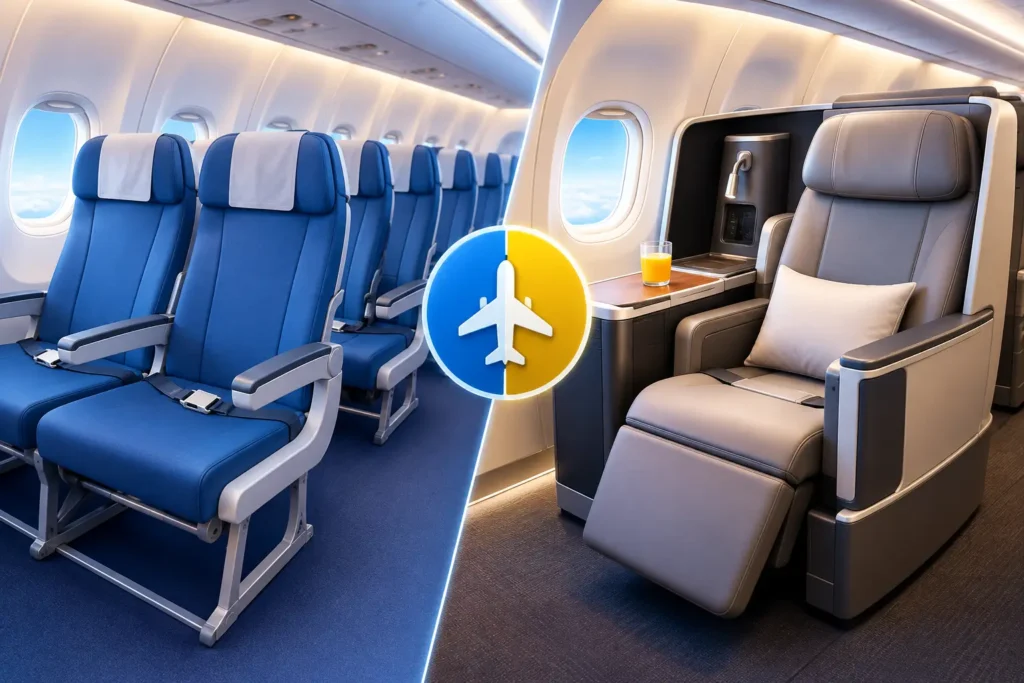
A $120 upgrade can feel like a steal when you are facing an overnight flight to Europe. The same upgrade can be a total waste on a two-hour hop where you barely finish a movie. That is the real question behind economy versus premium economy seats: not which cabin is better, but whether the extra cost buys enough comfort for your specific trip.
Airlines love a cabin label, but premium economy is not one fixed product. One carrier may give you a noticeably wider seat, extra legroom, a footrest, upgraded meals, and two checked bags. Another may offer a little more pitch, a nicer blanket, and not much else. The deal is in the details.
Economy Versus Premium Economy Seats: The Core Difference
Standard economy is built to get you there at the lowest possible fare. Seat pitch – the space between your seat and the one ahead – commonly lands around 30 to 32 inches on long-haul flights, although it varies by airline and aircraft. Seat width is often about 17 to 18 inches. You generally get a standard meal on international routes, basic entertainment where offered, and limited flexibility if your plans change.
Premium economy sits between economy and business class. It is not a lie-flat bed, airport lounge access, or a business-class meal with real silverware. Think of it as economy with breathing room and a few useful extras. Depending on the airline, you may get 37 to 40 inches of pitch, a wider seat, a deeper recline, a larger entertainment screen, a footrest, priority boarding, better meal service, and a more generous baggage allowance.
That extra space matters most when the flight is long enough for small annoyances to become major ones. On a 10-hour flight, a few more inches of legroom can mean you sleep a little, work without elbows colliding, and arrive less cranky. On a short domestic route, premium economy may be little more than an extra-legroom seat with a fancy name.
What You Are Actually Paying For
The seat is the headline, but the value often comes from the package around it. Premium economy fares can include perks that would cost extra in regular economy, such as checked bags, advance seat selection, priority check-in, earlier boarding, or improved change rules. If you would buy those anyway, the upgrade gap may be smaller than it first appears.
The catch: airlines package these benefits differently. Some premium economy tickets include two checked bags, while others include one or none beyond the economy allowance. Some offer a separate cabin; others simply use a roomier section near the front. Before paying, compare the fare rules, baggage allowance, seat map, and route-specific amenities. A premium economy badge alone does not prove you found a good deal.
Also separate premium economy from premium economy-like products. On many US domestic flights, the airline may call its upgraded seating Main Cabin Extra, Comfort+, Economy Plus, or a similar name. These seats typically offer more legroom and earlier boarding, but they usually do not deliver the wider seat, greater recline, upgraded meal, or dedicated cabin you may find on international premium economy. Useful? Absolutely. The same experience? Not even close.
When Premium Economy Is Worth the Upgrade
Premium economy earns its keep on long-haul flights, especially overnight routes. If you are flying from the US to Europe, Asia, Australia, or South America and want a better shot at resting, this is often the sweet spot between bargain economy and eye-watering business class prices.
It can also make sense when you need to function after landing. A traveler heading straight to a cruise port, wedding, hiking trip, poker tournament, or packed city break may value arriving with more energy. Saving $300 is great. Spending the first day of your trip exhausted and stiff is less great.
Taller travelers tend to get the clearest benefit. Anyone around six feet tall or above knows the difference between tolerating a flight and counting down every minute of it. Premium economy can provide the knee room needed to shift positions, use a laptop, or stand up without negotiating with the tray table and the stranger ahead of you.
The upgrade is especially tempting when the price gap is modest. There is no magic number, but a practical rule is to judge the increase as a percentage of your total trip cost. Adding $150 to a $3,000 vacation for a much better overnight flight may be an easy yes. Adding $800 to a $900 round-trip fare can wreck the value fast.
When Economy Is the Smarter Deal
For short flights, regular economy usually wins. If the route is under four hours, the comfort difference may not justify a major price jump. Save the cash for the hotel with the better location, the rental car, great food, or an experience you will remember after landing.
Economy is also the move when the premium cabin is mostly sold out or poorly positioned. A bulkhead seat may have more knee space but fixed armrests and no under-seat storage. A seat near the galley can bring noise and light. Some premium economy rows recline into you just as easily as economy rows do. Check the exact seat, not just the cabin title.
Traveling as a family can change the math too. Upgrading four people can turn a reasonable fare difference into a small vacation budget. If everyone can sit together in standard economy and the flight is manageable, that money may work harder elsewhere. A smart economy seat choice – aisle for the adult who gets up often, window for the sleeper, rows away from bathrooms and galleys where possible – can improve the flight for free.
How to Compare the Upgrade Without Getting Played
Start with the all-in price, not the first fare you see. Compare standard economy with bags, seat selection, and any flexibility you need against premium economy with its included benefits. A cheap basic economy ticket can look unbeatable until it picks up fees and puts you in a middle seat.
Next, inspect the aircraft and seat map. The same airline can offer a very different premium economy seat depending on whether you are flying a newer wide-body jet or an older aircraft. Look for the seat pitch, width, recline, layout, and whether there is a true separate cabin. A 2-4-2 layout can feel far better than a tight 3-4-3 economy setup, particularly for couples who want fewer strangers between them.
Then consider the route. Daytime flights favor saving money because you can watch movies, read, and accept a less-than-perfect seat. Red-eyes favor comfort because sleep is the prize. Connection length matters too. If you have a tight onward flight, priority boarding and getting off the plane earlier may have real value.
Finally, price the upgrade more than once. Fares move, and airlines sometimes discount premium economy at booking, after purchase, or during online check-in. FareBandit travelers chasing stolen deals should compare cabin prices when they spot a low base fare, rather than assuming the first price is the final price. A premium economy ticket can occasionally cost only a little more than an economy fare with baggage and seat fees added.
A Quick Reality Check on Business Class
Premium economy is not business class on a discount. If your main goal is sleeping flat, accessing a lounge, or having a private work space, premium economy will not replace business class. But that does not make it a bad buy.
For many budget-conscious travelers, it is the rational compromise: significantly more comfort than economy without multiplying the ticket price several times over. The best value often appears when business class is far beyond the budget but a long flight makes bare-bones economy feel like a punishment.
Make the Cabin Fit the Trip
There is no prize for booking the cheapest seat if it leaves you miserable, and no prize for paying extra for perks you will not use. Put the upgrade against the length of the flight, the timing, your body, your baggage needs, and what else that money could fund once you land.
If premium economy gives you meaningful room to rest on a long-haul deal, grab it before the fare disappears. If regular economy gets you to the beach, the table game, or the weekend escape for a price that leaves more money for the trip itself, take the win and fly on.
