
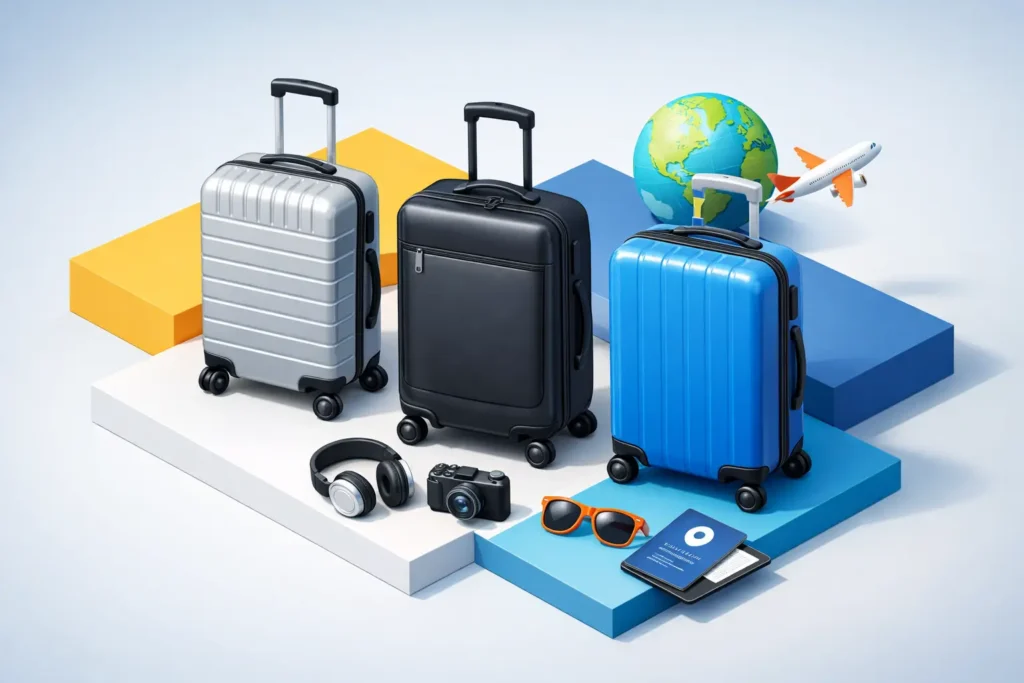
Airlines love two things – fees and fine print. That is exactly why a smart carry on luggage review matters more than flashy branding or a celebrity ad. The right bag can save you from checked bag charges, help you move faster through the airport, and keep a cheap flight deal from getting expensive at the gate.
For budget travelers, carry-on luggage is not just gear. It is part of the strategy. If you are chasing a weekend beach deal, a last-minute city break, or a poker trip with tight connections, your bag needs to work as hard as your flight search. That means size rules, weight, layout, wheel quality, and durability all matter a lot more than a fancy logo.
What actually makes a carry-on worth buying
A good carry-on does three jobs well. First, it fits airline size limits often enough that you are not sweating at boarding. Second, it holds enough for a real trip without turning into a brick. Third, it survives rough handling, overhead bin wrestling, and those airport floors that somehow destroy cheap wheels in one trip.
Most travelers should start with size, not style. The common sweet spot is around 22 x 14 x 9 inches, but airlines are not perfectly consistent. That is where a lot of travelers get burned. A bag advertised as carry-on approved may work on one airline and fail on another, especially on budget carriers or smaller regional planes.
Weight is the next trap. Hard-shell bags can look sharp and protect fragile items better, but some are surprisingly heavy before you pack a single T-shirt. Soft-sided bags usually give you a little more flexibility and can squeeze into tight spaces, but they may not protect contents as well and can start looking beat-up sooner.
Then there are the wheels. Spinner wheels feel great in a smooth terminal. On cobblestones, parking lots, cracked sidewalks, and train platforms, not so much. Two-wheel rollers are less trendy but often tougher. If your trip is mostly airport to rideshare to hotel, four spinners are a safe bet. If you move through older cities or uneven streets, durability may matter more than glide.
Carry on luggage review: the best types for different travelers
There is no single winner for everyone, which is where many reviews go off the rails. The best carry-on depends on how you travel, not just how the bag looks in product photos.
Best for quick domestic trips
If you are taking two- to four-day trips, a compact hard-shell spinner often hits the sweet spot. It is easy to maneuver, simple to pack, and ideal for travelers who like structure. Look for one with a clamshell design, compression straps, and a real telescoping handle that does not wobble like a shopping cart.
The trade-off is packing space. Hard-shell interiors can be less forgiving if you overpack. If you are the kind of traveler who returns home with extra souvenirs, snacks, or impulse buys, a slightly expandable soft-sided option may age better.
Best for budget airline travelers
If you fly low-cost carriers often, dimensions become everything. In this case, less is more. A lighter, slightly underbuilt-looking carry-on from a reliable mid-range brand can actually be smarter than a bulky premium case that pushes size limits.
You want a bag that slides by without drama. Minimal exterior pockets, clean dimensions, and low empty weight can make a bigger difference than luxury finishes. Paying more for a premium bag only makes sense if it consistently avoids damage and lasts for years. Otherwise, you are spending first-class money to board Group 9.
Best for longer trips without checking a bag
For travelers who know how to pack lean, a soft-sided carry-on has a strong case. Exterior pockets help with chargers, documents, and quick-grab layers. The bag can flex a bit when needed, and some models offer better internal organization than hard cases.
This is also where a good personal item matters. A carry-on suitcase plus a well-sized backpack can cover a week or more if you pack smart. That combo often beats one oversized roller that gets flagged at the gate.
Best for rough travel days
If your trips include trains, buses, older hotels without elevators, or lots of city walking, durability beats elegance. A scuff-resistant shell, sturdy wheels, and reinforced corners are worth paying for. Fancy finishes and glossy shells look good for about one trip.
Travel is hard on luggage. Pretending otherwise is how people end up buying the same cheap suitcase twice.
Hard shell vs soft shell in a real-world carry on luggage review
Hard shell bags win on looks, water resistance, and protection. If you carry electronics, souvenirs, or anything breakable, that extra structure helps. They also tend to look cleaner and newer longer, at least until the scratches pile up.
Soft shell bags win on flexibility and often on practical packing. Outer pockets are genuinely useful, especially when you need a laptop, sweater, passport, or charger without opening the entire bag in a busy terminal. They can also squeeze into overhead bins more easily when space gets tight.
If you are a casual leisure traveler who values simplicity, hard shell is often the easy pick. If you are a frequent traveler who cares more about utility than polish, soft shell usually holds up better in daily use. It depends on whether your priority is protection or adaptability.
Features worth paying for and features you can skip
There are a few extras that earn their keep. Smooth handles with multiple height stops matter. So do quality zippers, interior compression, and wheels that feel solid under load. If a bag feels shaky when empty, it will feel worse packed.
Built-in laundry sections and smart internal dividers can be useful, but only if you actually use them. USB charging ports are mostly a gimmick now. So are flashy brand-name lining fabrics and overcomplicated compartments that steal usable space.
An expansion zipper sounds great, but be careful. Expanding a carry-on can push it beyond airline limits fast. It is useful for the trip home, but only if you are willing to risk checking it if needed.
TSA-friendly locks are nice to have, not essential. A strong zipper matters more than a built-in lock on a weak bag.
Price tiers: where the value really is
Cheap carry-ons can work for occasional travel, but the lowest end of the market usually cuts corners on wheels, handles, and zipper quality. That is a risky place to save money because those are exactly the parts that fail first.
The best value is usually in the mid-range. This is where you start seeing better wheel systems, stronger shells or fabrics, and warranties that are not just marketing wallpaper. For many travelers, this is the sweet spot – good enough to last, affordable enough to make sense.
Premium luggage can be worth it if you travel often and care about long-term durability, smoother handling, and better repair support. But if you take two trips a year, spending top dollar on a carry-on may not be your best travel investment. That money might go further on seat upgrades, airport transfers, or one more getaway.
That is the real budget-travel mindset. Spend where it saves you stress or repeat purchases, not where it just looks impressive on Instagram.
How to choose the right bag before you buy
Start with your most common trip, not your dream trip. If you mostly take short domestic flights, buy for that. If you often fly budget airlines, check those dimension rules first. If you pack heavy, pay extra attention to empty weight.
Next, think about where you actually roll the bag. Airport-only travelers can lean toward spinner convenience. Travelers crossing sidewalks, train stations, and rough streets should be tougher on wheel quality.
Finally, be honest about your packing habits. If you are an overpacker, no suitcase will save you from yourself. But a well-designed carry-on can help by giving you structure, compression, and just enough space to keep things efficient.
A solid carry-on should make travel cheaper and easier. That is the standard. Not luxury branding. Not hype. Not some claim that it changed a travel influencer’s life.
The smartest carry-on is the one that fits your trip
The best carry-on luggage is the one that matches your airline, your packing style, and your tolerance for airport nonsense. In a crowded market full of lookalike bags and overblown promises, the smartest move is to buy for function first and aesthetics second.
If you travel to save money, your luggage should do the same. A dependable carry-on keeps fees down, speeds up your airport routine, and lets you jump on deals fast without overthinking what to pack. That is the kind of travel gear that earns its spot – and leaves more room in the budget for the fun part of the trip.

Pingback: Travel Insurance vs Airline Protection – FareBandit